

Web developers are responsible for creating, optimising, and maintaining websites and web apps so they work properly for both users and businesses. They build pages, write features, integrate tools, debug issues, optimise speed, strengthen security, and help keep sites responsive, functional, and ready to scale.
Top Takeaways
- Web developers create the functional components of a website: page layouts, buttons, forms, databases, dashboards, and special features
- The job is more than just coding, it also covers speed, mobile usability, security, accessibility, and long-term maintainability
- Front-end developers work on what users interact with and see, while back-end developers write the server-side logic, databases, and APIs, and handle data security
- Web developers work with designers, SEO specialists, content writers, and marketers to make sure a website looks good, functions well, and meets business objectives
- Even after launch, a website usually needs ongoing developer support for updates, bug fixes, performance upgrades, security checks, and new features
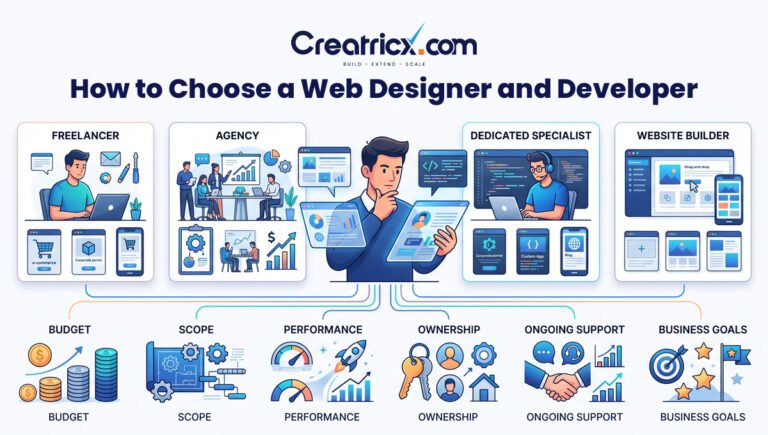
- Depending on the size of the project, budget, and ongoing support needs, companies can hire freelancers, agencies, or dedicated remote web developers
What Is a Web Developer?
A web developer is a professional responsible for building the functional framework of a website or web application. They take an idea, a design, or a business need and translate it into a product that works properly on the web.
This can include building booking systems, integrating payment gateways, designing pages, building navigation, creating contact forms, connecting databases, and confirming the website is responsive on mobile, tablet, and desktop devices.
Web developers often work with designers, marketers, SEO teams, and business owners. The designer may decide how the website should look, but the developer makes sure it loads, responds, submits forms, stores data, and behaves properly, because a website is expected to do a lot more than just look good these days.
A professional web developer also thinks beyond launch. They make sure the site is secure, scalable, easy to update, and ready for future improvements, rather than treating launch day as the finish line.
What Do Web Developers Actually Do?
Web developers turn a website plan into a working online product. The job is not only to write code, although that's the part everyone remembers, since keyboards make people look busy.
In real projects, web developers usually handle tasks such as:
- Building website pages based on approved designs
- Making layouts work on mobile, tablet, and desktop screens
- Creating menus, buttons, forms, filters, search bars, and interactive features
- Connecting the website with databases, CRMs, email tools, payment gateways, booking systems, or APIs
- Fixing broken pages, layout issues, form errors, and technical bugs
- Improving website speed, loading performance, and user experience
- Setting up secure login systems, admin panels, or customer dashboards
- Supporting technical SEO with clean structure, crawlable pages, redirects, and schema where needed
- Maintaining the website after launch with updates, testing, security checks, and new features
A web developer's real value is making sure the website does what the business needs it to do. A homepage should load fast, forms should send leads, checkout should work, and users shouldn't need the patience of a saint just to open a service page.
Types of Web Developers
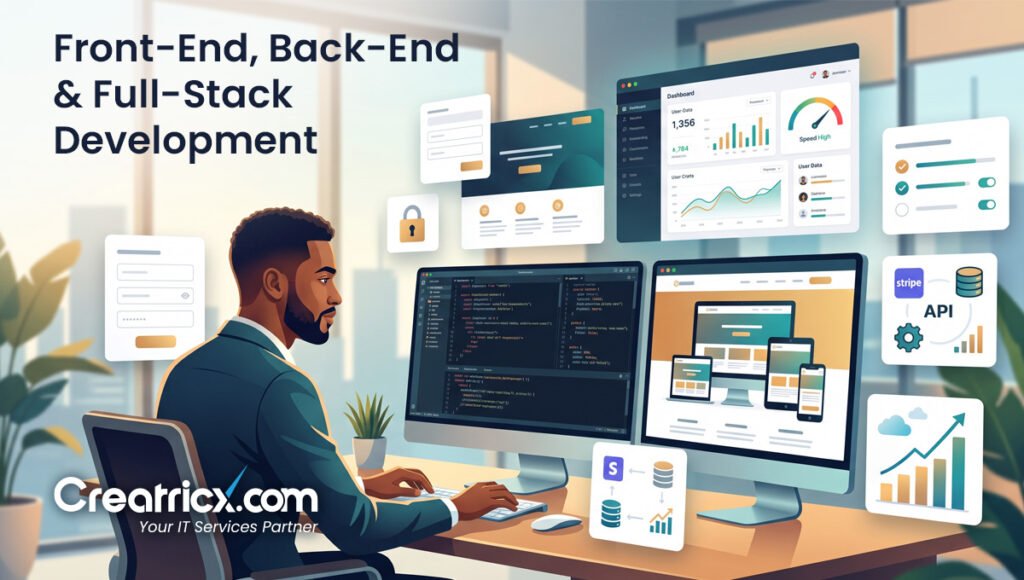
Web development is usually split into a few main roles. Some developers specialise in one area, while others handle several parts of a project because one job title clearly wasn't complicated enough already.
Front-End Developers
Front-end developers build the parts of a website users see and interact with. They work on layouts, menus, buttons, forms, animations, responsive design, and the overall browser experience.
Their job is to make sure the website looks right, works smoothly, and adapts properly across mobile, tablet, and desktop screens.
Back-End Developers
Back-end developers are responsible for the server side of a website or web application: databases, user profiles, admin portals, APIs, payment systems, security measures, and the actual data flow underneath it all.
Users may not see this work directly, but they certainly notice when it fails.
Full-Stack Developers
Full-stack developers work on both the front-end and back-end. They can build user-facing pages and also manage the technical systems behind them.
For small to mid-sized projects, a full-stack developer can be genuinely useful, since one person understands how the visible website and hidden functionality connect.
CMS Developers
Developers working with CMS platforms build within WordPress, Shopify, WooCommerce, Webflow, and a variety of other content management systems. They develop themes, design templates, implement functionality, fix plugin problems, and simplify website management for teams, all without needing to touch the underlying code for every small change.
Not every developer covers every one of these areas. Confirm which of these skills the person or team you're considering actually specialises in, rather than assuming "web developer" means an identical skill set everywhere.
Web Developer vs Web Designer: What's the Difference?
A web designer plans how a website should look and feel. A web developer builds the working version of that design and makes sure everything functions properly. Both roles matter, unless the goal is a beautiful website that behaves like a broken vending machine.
| Area | Web Designer | Web Developer |
| Main role | Plans the visual layout and user experience | Builds the website and makes it function |
| Focus | Design, branding, structure, and usability | Code, features, integrations, speed, and performance |
| Tools | Figma, Adobe XD, Photoshop, design systems | HTML, CSS, JavaScript, PHP, Python, databases, CMS platforms |
| Output | Wireframes, mockups, prototypes, visual designs | Live website pages, features, forms, dashboards, and systems |
| Business value | Makes the website clear, attractive, and easy to use | Makes the website work, load, connect, scale, and stay reliable |
The best websites usually need both design and development. A strong design gives users a clear path, while strong development makes sure that path actually works on real devices, real browsers, and real business systems.
Why Web Developers Matter for Business Websites
Web developers matter because a business website needs to be more than simply online. It needs to be fast, mobile friendly, tell users what to do, collect leads, keep data safe, and be able to grow in future without breaking every time a plugin gets updated.
An expert web developer improves:
- User experience: pages, menus, buttons, and forms all working smoothly so visitors can easily find what they're looking for without frustration or abandonment
- Website loading speed: a faster website keeps users on the page and can improve SEO results
- Mobile usability: the website is responsive across smartphones, tablets, and desktops, which matters since users tend to judge an entire business from a small screen
- Security: developers protect forms, logins, databases, payment systems, and admin areas from common threats
- SEO basics: clean code, crawlable pages, structured headings, redirects, schema, and Core Web Vitals help search engines understand the site
- Conversions: a good website design lets users easily enquire, book, buy, or register
- Scalability: as the business grows, developers can add more pages, features, integrations, and systems without rebuilding the whole thing from scratch
A good-looking website may attract attention, but good development is what makes that attention useful for the business.
Need a Website That Works Beyond Looks?
A good website shouldn't just look polished. It should load fast, guide users clearly, collect leads properly, and support your business as it grows. Creatricx helps businesses build responsive, secure, and conversion-focused websites with professional web development support.
7 Common Web Design Tasks
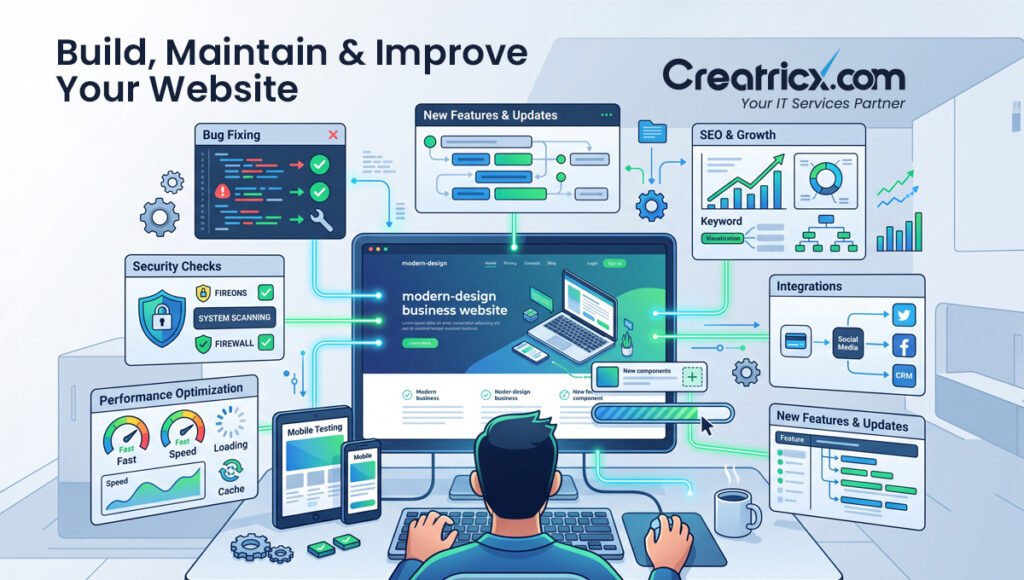
The role of web developers differs depending on the platform, business goal, and type of website. Some projects need a simple service website, but others need custom features, payment systems, dashboards, or integrations, since fewer businesses seem content with a simple brochure site these days.
Typical web design tasks include the following:
- Landing page development: creating targeted pages to generate leads, launch products, run SEO campaigns, or support advertising
- Website redesign: rebuilding outdated websites for better usability, faster loading times, cleaner layouts, and a more organised structure
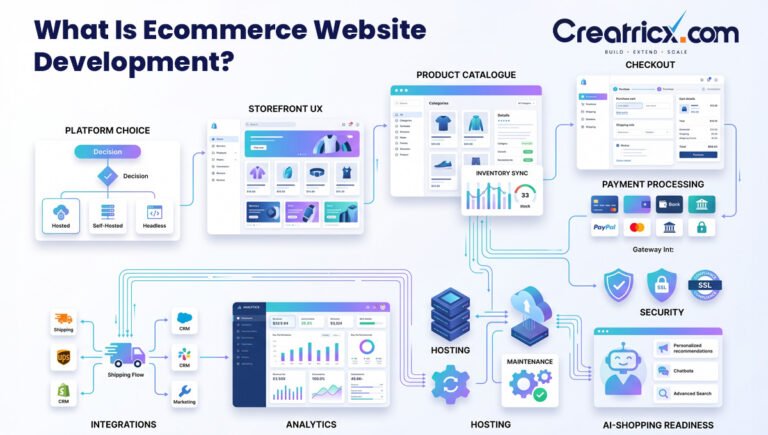
- E-commerce development: building online stores with product pages, shopping carts, checkout flows, payment gateways, shipping settings, and order management
- Custom web application development: building portals, dashboards, booking systems, customer accounts, internal tools, or SaaS-style platforms
- Website speed optimisation: improving Core Web Vitals, scripts, caching, image handling, and load time
- API and third-party integrations: linking websites to CRMs, email marketing, analytics, payment, chat, and automation tools
- Website maintenance: security improvements, testing forms, plugin updates, bug fixes, and stability after launch
The nature of the work varies by project, but the goal stays the same: making the website a reliable, functional business asset rather than an expensive digital billboard that just happens to stay online.
What Web Developer Skills Are Actually Used?
Web developers combine problem-solving, testing, platform knowledge, and coding skills to build websites that function well in the real world, since websites need considerably more than a good-looking homepage with one big button.
Commonly used web development skills include:
- HTML: used to define the structure of the content on a website, including headers, paragraphs, images, forms, and page sections
- CSS: controls the visual presentation of a website, such as colours, spacing, fonts, layouts, and responsive design
- JavaScript: used to build interactive features such as dynamic forms, real-time updates, filters, popups, and sliders
- Server-side languages: developers manage back-end functionality with PHP, Python, Node.js, Ruby, Java, and similar technologies
- Databases: almost every website needs one to store information such as users, orders, bookings, products, and form submissions
- CMS platforms: many developers work with WordPress, Shopify, WooCommerce, Webflow, Drupal, or custom CMS setups
- Security basics: securing forms, admin panels, user accounts, payment flows, and data handling
- Testing and debugging: checking for layout issues, broken links, form problems, browser issues, or bugs before and after launch
- Performance optimisation: improving technical architecture, scripts, caching, image size, and loading speed
- SEO-friendly development: building crawlable pages, schema, redirects, mobile responsiveness, clean URLs, and heading structure
A web developer who is good at coding isn't just a coding person. They understand how design, speed, security, SEO, and business objectives connect within a working website.
Build a Website That Search Engines Can Actually Understand
A website needs more than attractive pages to compete online. It needs a clean technical setup, clear structure, fast performance, and SEO-friendly foundations from the start. Creatricx provides web development and SEO support together, so your website is built for users, search engines, and long-term growth, instead of becoming another attractive project with hidden technical problems.
Freelance Developer, Agency, or Dedicated Remote Team?
Depending on the size of the project, timeline, budget, and post-launch support required, the best way to hire web developers for a business will vary considerably.
A freelancer can work well for a small landing page update. A complete website redesign or rebuild is usually a safer fit for an agency, since that kind of project needs planning, design, development, testing, and launch support working together.
If the business needs ongoing support, such as new landing pages, technical updates, integrations, maintenance, or performance improvements across multiple websites, it makes sense to have a dedicated remote team in place. This gives companies development capacity without hiring a full in-house team from scratch.
Businesses that match the working model to the actual scope of work, rather than defaulting to whichever option feels most familiar, tend to get better outcomes and fewer surprises along the way.
Need Ongoing Web Development Without Building an In-House Team?
If your website requires constant improvements, new pages, integrations, fixes, and performance support, it may be more practical to hire a dedicated remote web team rather than handling each task separately. Creatricx helps companies hire skilled remote web developers who deliver long-term technical support, flexible capacity, and straightforward communication for ongoing work.
This suits companies that need consistent development help but don't want the cost, delay, and hiring hassle of building a full internal team.
Frequently Asked Questions
What does a web developer do daily?
A web developer's daily work can include writing code, updating website pages, fixing bugs, testing forms, improving speed, checking mobile layouts, reviewing technical issues, and building new features. Their tasks depend on the project, platform, and business needs.
Do web developers design websites?
Some web developers can help with design, but web design and web development are different skills. A designer usually plans the layout, branding, and user experience, while a developer builds the working website from that design. On smaller projects, one person may handle both.
Is coding the same as web design?
Coding is a big part of web development, but it's more than just writing code. Developers also plan the technical architecture, test functionality, integrate tools, optimise performance, handle updates, and fix issues affecting how the website works.
Do web developers maintain websites?
Yes, many web developers offer website maintenance services once a site launches, covering plugin checks, speed improvements, updates, bug fixes, security, and new pages as the business grows.
Can web developers help with SEO?
Web developers can support SEO by improving technical parts of a website, such as speed, mobile usability, crawlability, redirects, structured data, clean URLs, and page structure. They usually work alongside SEO specialists rather than replacing a full SEO strategy.
How much does it cost to hire a web developer?
Cost depends heavily on project scope. A small landing page costs far less than a custom e-commerce build or an ongoing support arrangement, so it's worth getting a scoped quote rather than comparing generic day rates.
Website builder or web developer, which should I choose?
A website builder can work for a basic starter website. A web developer becomes the better choice once custom design, faster performance, stronger security, integrations, e-commerce capabilities, or long-term flexibility matter to the business.
What is the difference between front-end and back-end development?
Front-end development is everything users see, such as layouts, menus, buttons, forms, and responsive design. Back-end development covers what happens behind the scenes, including databases, servers, APIs, user accounts, and secure data processing.
Disclaimer
This article reflects general industry practice around web development roles and services as of 2026, alongside Creatricx's published service model. Individual project scope, timelines, and costs vary by business and requirements. Always confirm current terms directly with any provider before starting a project.
Final Thoughts
Web developers perform the technical work that keeps websites functional, secure, reliable, and useful for real users. They build pages, code features, connect systems together, fix problems, speed things up, and keep websites running after launch.
For businesses, this matters because a website is often part of sales, marketing, customer support, recruitment, and brand trust. A weak website can lose leads quietly, no alarm bells, no dramatic music, just visitors leaving and money drifting off into the void.
The right web developer or development team helps turn a website from a basic online presence into a working business asset. A company needing a new website, a redesign, technical fixes, e-commerce development, or ongoing support has a solid foundation to build from either way.