
Book Editing & Proofreading Services | Creatricx
Creatricx provides book editing and proofreading services for authors and businesses that need a clearer, more consistent and publication-ready manuscript.
The editorial scope can include developmental editing, line editing, copy editing and manuscript proofreading depending on the condition of the draft and the stage of the publishing process.
Use book editing services when the manuscript still needs structural, language or consistency improvements. Use proofreading services when the content and layout are substantially settled and the priority is identifying final publication errors.

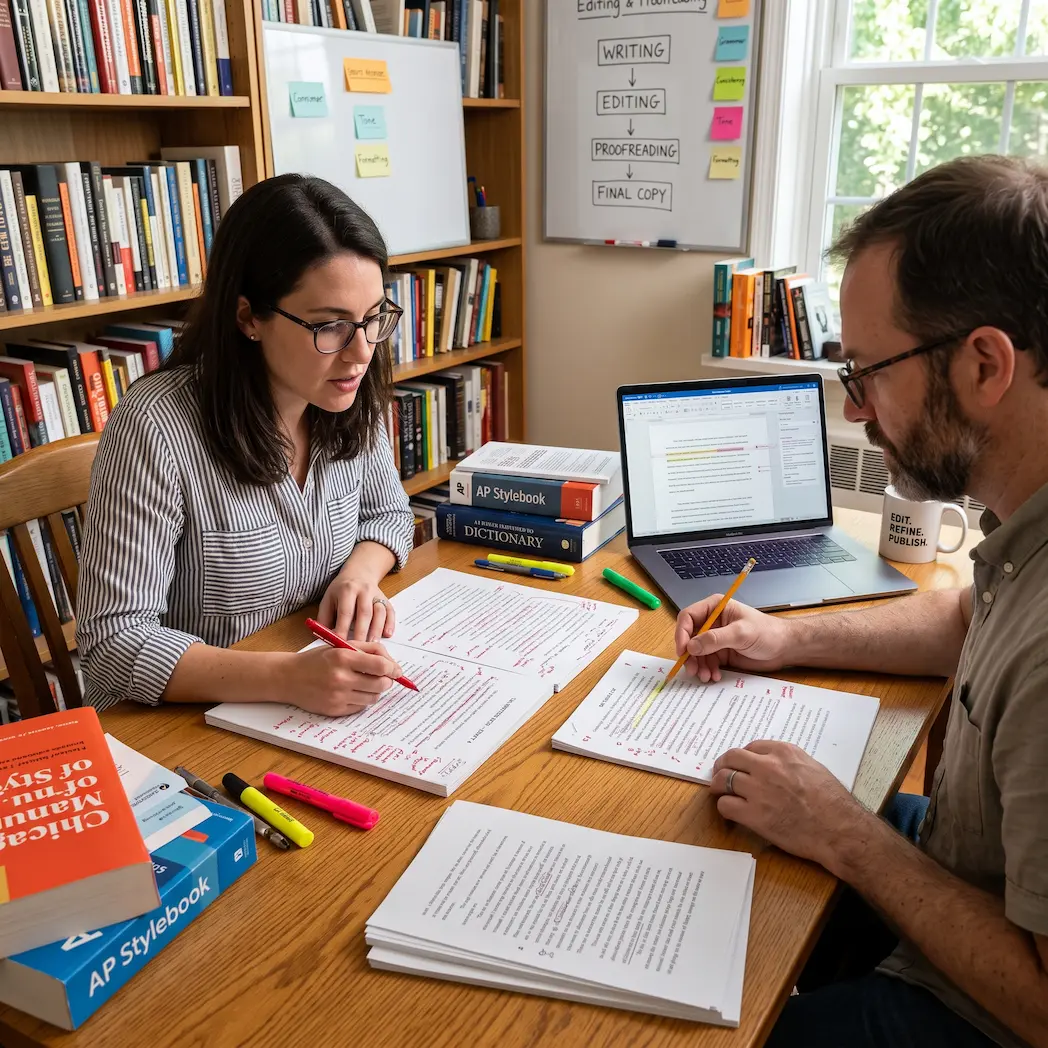
Book Editing and Proofreading Services
Manuscript editing is not one single pass. Different editorial levels solve different problems, and using the wrong level can either leave major issues untouched or spend time polishing sentences that may later be rewritten.
The first step is to identify whether the manuscript needs structural development, sentence-level improvement, mechanical consistency or final error checking.
- Structural development and manuscript-level review
- Sentence-level clarity, rhythm and readability
- Grammar, terminology and mechanical consistency
- Final publication error checking
Developmental, Line, Copy Editing and Proofreading
Each editorial level addresses a different stage of manuscript development. The right choice depends on the largest unresolved problem in the draft.
| Editorial Level | Primary Focus | Best Timing | Typical Author Need |
|---|---|---|---|
| Developmental Editing | Structure, argument or story flow, chapter order, missing material, repetition and manuscript-level problems. | When the manuscript is complete enough to review but larger structural changes are still possible. | The book has the right ideas or material but the structure or reader journey is not yet working. |
| Line Editing | Clarity, rhythm, tone, repetition, sentence flow and how effectively the writing communicates. | After major structural decisions are stable. | The manuscript says the right things but needs stronger, cleaner prose. |
| Copy Editing | Grammar, usage, consistency, style, terminology, punctuation and mechanical accuracy. | When structure and wording are largely settled. | The manuscript needs consistent professional language before final production. |
| Proofreading | Typos, punctuation, spacing, obvious formatting inconsistencies and final publication errors. | After editing and usually after layout is substantially complete. | The manuscript is essentially finished and needs a final quality pass. |
Developmental Editing Services
Developmental editing services focus on the manuscript as a whole. The editor reviews how the chapters or sections work together, whether the argument or narrative progresses clearly, where information is missing and where material may need to be moved, expanded or removed.
- Structure and chapter organization
- Argument or narrative progression
- Missing or repeated material
- Reader journey and manuscript-level issues
Line Editing
Line editing works at paragraph and sentence level to improve clarity, rhythm, tone, repetition and readability while preserving the author's intended meaning and voice.
- Sentence clarity and flow
- Rhythm and readability
- Tone and voice consistency
- Repetition and awkward phrasing
Copy Editing Services
Copy editing services, also commonly described as copyediting services, focus on correctness and consistency: grammar, punctuation, spelling, capitalization, terminology, style and other mechanical details that should be standardized before publication.
- Grammar and punctuation
- Spelling and capitalization
- Terminology and usage
- Mechanical and style consistency
Proofreading Services
Proofreading services provide the final error-checking stage after substantive editing is complete. Proofreading should not be treated as a substitute for developmental, line or copy editing when the manuscript still has larger structural or language problems.
- Typos and punctuation errors
- Spacing inconsistencies
- Obvious formatting issues
- Final publication error checking
Editing vs Proofreading: Which Do You Need?
The manuscript problem usually points to the editorial level. Start with what still needs to change rather than choosing a service by name alone.
| If Your Manuscript Has This Problem | Likely Service |
|---|---|
| The chapters or argument do not flow well. | Developmental editing. |
| The ideas are sound but sentences feel unclear, repetitive or awkward. | Line editing. |
| The manuscript needs grammar, punctuation, terminology and style consistency. | Copy editing. |
| The text has already been edited and needs a final publication error check. | Proofreading. |
| You are unsure which level is appropriate. | Begin with manuscript review and scoping before confirming the editorial level. |
Editing Can Change Meaning or Structure
Developmental, line and copy editing may result in suggested changes that require author decisions. The deeper the editorial level, the more important it is to preserve a clear author-review step.
Proofreading Comes Last
Manuscript proofreading is most effective after writing, substantive editing and major formatting decisions are already complete. Otherwise, text may be proofread before later changes make that work obsolete.
What You Receive From an Editorial Review
The exact deliverables should be confirmed before the project begins because not every editing level requires the same output. Common editorial deliverables can be selected according to the manuscript, file format and agreed review workflow.
- Edited manuscript
- Tracked changes where the workflow supports them
- Editorial comments and queries where useful
- Editorial summary or style documentation when included in scope
Edited Manuscript
Shows the text after editorial work, with changes presented in the agreed document format.
- Relevant across editing and proofreading engagements
Tracked Changes
Lets the author see suggested insertions, deletions and corrections.
- Appropriate where Microsoft Word or a compatible review workflow is used
Editorial Comments
Explains questions, recurring issues or decisions requiring author input.
- Useful for developmental, line and copy editing where explanation is needed
Editorial Letter / Summary
Summarizes larger manuscript-level findings and priorities.
- Often appropriate for developmental or substantial manuscript editing
Style Sheet
Records spelling, capitalization, terminology, names and other consistency decisions.
- Useful for longer manuscripts or copyediting workflows
Issue / Query List
Collects unresolved factual, structural or author-decision questions.
- Useful where issues should be resolved before finalization
Our Editing and Review Process
A clear workflow keeps the editing level, author decisions, editorial conventions and next publishing stage aligned from the beginning.
Define the Manuscript and Editorial Goal
Confirm manuscript type, current stage, approximate word count, intended audience, publication goal, requested editorial level and any relevant style or terminology requirements.
Review Scope Before Full Editing
Review enough of the manuscript to confirm whether the requested service matches the actual editorial need. If structural problems remain, proofreading alone should not be recommended simply because it is the smallest-sounding task.
Agree Editorial Conventions
Confirm the working file format, language variant, any required style guide, terminology preferences and how author queries or factual uncertainties should be handled.
Complete the Editorial Pass
Edit the manuscript according to the agreed level, recording changes and comments through the approved review method.
Author Review
The author reviews substantive suggestions, resolves questions and confirms decisions that affect meaning, structure, terminology or factual content.
Follow-Up and Finalization
Complete any agreed follow-up step, resolve remaining editorial queries and prepare the manuscript for the next publishing stage. The exact number of follow-up or revision rounds is defined in scope rather than assumed.
Handoff to Formatting or Publishing
Once the manuscript is editorially ready, move it into cover or interior formatting, publishing setup or another required stage without unnecessarily reopening settled text.
Editor Matching and Quality Control
The right editorial fit depends on the level of work, manuscript type, subject matter, language conventions, author voice and stage of publication.
Editorial Level
Developmental editing requires different strengths from final proofreading, so the requested level should be clear before the project begins.
Manuscript Type
Business books, guides, narrative work and other manuscript types can have different structural and language needs.
Subject / Domain Familiarity
Technical or specialist topics may require an editor who is comfortable working with the terminology and source material.
Language Variant
US, UK or another required English convention should be agreed and applied consistently throughout the manuscript.
Author Voice
The editorial goal should be to strengthen clarity and consistency without flattening the author's intended tone, terminology or personality.
Publishing Stage
An early manuscript needs a different review mindset from a near-final formatted proof, so the stage of production affects the editorial approach.
Quality Control Before Handoff
Before handoff, confirm that the work matches the agreed editorial level, major comments are clear, unresolved author questions are visible and the manuscript is ready for the next production stage.
Common Manuscript Issues We Can Review
The exact review depends on the agreed editing level, but common manuscript issues can include structural, language, consistency and final-proof problems.
Structure
Weak chapter order, missing transitions, repeated sections, uneven pacing or unclear argument progression.
Clarity
Sentences or paragraphs that obscure the intended meaning.
Repetition
Repeated explanations, examples, phrases or ideas that slow the manuscript.
Voice / Tone
Inconsistent tone or edits that should be adjusted to preserve the author's intended voice.
Consistency
Names, capitalization, terminology, dates, headings, spelling and style decisions used inconsistently.
Grammar / Mechanics
Grammar, punctuation, usage, spelling and sentence-level errors.
Final Proof Errors
Typos, spacing issues, punctuation mistakes and obvious formatting inconsistencies remaining before publication.
Turnaround and Scope Factors
A realistic editorial schedule should be set after the manuscript and editorial level are reviewed. Word count, editing depth, manuscript condition and author-review requirements can all affect the amount of work involved.
| Scope Factor | Why It Affects the Editorial Schedule |
|---|---|
| Word Count | Longer manuscripts require more reading, editing and quality-control time. |
| Editing Level | Developmental editing normally involves deeper analysis than proofreading. |
| Manuscript Condition | A clean, organized draft requires less intervention than a manuscript with unresolved structural or consistency issues. |
| Subject Complexity | Technical, research-heavy or specialist content can require more careful terminology and query handling. |
| Style Requirements | A detailed house or style guide, terminology system or reference convention can add consistency checks. |
| Author Review | The schedule depends partly on how quickly author questions and substantive decisions are resolved. |
| Deadline | Urgent deadlines may affect feasibility and should be confirmed before work is accepted. |
Where Editing Fits in Your Publishing Workflow
The next step depends on whether the manuscript still needs writing, is ready for editing, has completed editorial review or is already moving into production and publishing.
Manuscript Still Needs Writing or Development
Complete writing or manuscript development before final editing.
Book & E-Book WritingDraft Is Ready for Editorial Review
Choose the appropriate editing level based on the manuscript's largest unresolved problem.
Edited Manuscript Is Ready for Production
Prepare the cover, interior and e-book formatting after editorial decisions are settled.
Book Cover Design & FormattingFormatted Files Are Ready
Complete the required platform and publishing setup for the finished files.
Publishing SetupNeed the Complete Journey Coordinated?
Return to the full publishing-services pathway for writing, editing, production and publishing support.
Book & E-Book Publishing ServicesFrequently Asked Questions
Clear answers about editing levels, manuscript proofreading, editorial deliverables, author review and project scope.
What do book editing and proofreading services include?
Book editing and proofreading services can include developmental editing, line editing, copy editing and final proofreading. The right level depends on whether the manuscript still needs structural, language, consistency or final-error work.
What is the difference between editing and proofreading?
Editing can address structure, clarity, tone, consistency and language depending on the editing level. Proofreading is the final error-checking stage after substantive editorial decisions are substantially complete.
What are developmental editing services?
Developmental editing services review the manuscript at a structural level, including chapter organization, argument or narrative flow, repetition, missing material and larger reader-experience issues.
What is line editing?
Line editing focuses on how the writing works sentence by sentence and paragraph by paragraph, improving clarity, flow, tone and readability while preserving the intended meaning.
What is copy editing?
Copy editing services and copyediting services focus on grammar, usage, punctuation, spelling, terminology, consistency and style after the larger structural and language decisions are stable.
When should I use proofreading services?
Use proofreading services when the manuscript has already been edited and is close to publication. If the draft still has structural or major sentence-level problems, editing should come first.
Do you use Track Changes?
Track Changes is a useful review method where Microsoft Word or a compatible workflow is used, but it should be confirmed as part of the file and review method before the project begins rather than assumed for every engagement.
Will I receive an editorial letter or style sheet?
An editorial letter or style sheet can be useful depending on the editing level and manuscript. These outputs are included as project deliverables only when they form part of the agreed editorial scope.
How do I know which editing level my manuscript needs?
Start with the manuscript's biggest unresolved problem. Structural and reader-journey issues point toward developmental editing; sentence-level clarity toward line editing; mechanical consistency toward copy editing; and final publication errors toward manuscript proofreading.
Can an editor preserve my author voice?
Preserving author voice should be an explicit goal of the editorial brief. The editor should improve clarity and consistency without unnecessarily replacing the author's intended tone, terminology or personality.
Do you edit business books and e-books?
Creatricx supports books, e-books, guides and business publications. The exact subject or manuscript fit should still be confirmed during scoping.
How long does editing take?
Timing depends on word count, editing level, manuscript condition, subject complexity, required style conventions, author review and deadline. A specific schedule should be confirmed after manuscript review.
How many revision rounds are included?
The included review and follow-up process should be defined in the project scope. A universal number of revision rounds should not be assumed because the appropriate follow-up depends on the manuscript and editing level.
Can I get a sample edit?
A sample edit can be useful for understanding an editorial approach, but availability should be confirmed during scoping rather than assumed. A sample should only be offered when a defined sample-edit process is available for the project.
What happens after editing is complete?
The manuscript can move into cover and interior formatting, e-book preparation and publishing setup, or return to the author for further writing if the editorial review identifies substantive work that still needs to be completed.
Ready to Strengthen Your Manuscript Before Publication?
Share your manuscript stage, approximate length and the editorial problems you want to solve. Creatricx can scope book editing and proofreading services around developmental editing, line editing, copy editing or proofreading without forcing a deeper service than the manuscript actually needs.