
To hire a dedicated development team, start by defining your project goals, required skills, budget, timeline, and workload. Then compare experienced providers, review their past work, interview the team, check communication and security practices, agree on ownership terms, and start with a clear first milestone before scaling.
Key Takeaways
- A dedicated development team is best for businesses that need ongoing technical support, not just a one-off project.
- Before hiring, define the project goals, required roles, tech stack, budget, timeline, and expected workload.
- The right team should bring more than developers. You may also need QA, UI/UX, DevOps, project management, or technical leadership.
- Communication, reporting, security, and code ownership should be agreed before the work starts.
- Start with a clear first milestone before expanding the team. An early delivery review gives both sides a chance to confirm that the working model is clear before the engagement expands.
- A dedicated team works well when you need long-term product development, website improvements, app development, SaaS support, or scalable technical capacity.
Table of Contents
What Is a Dedicated Development Team?
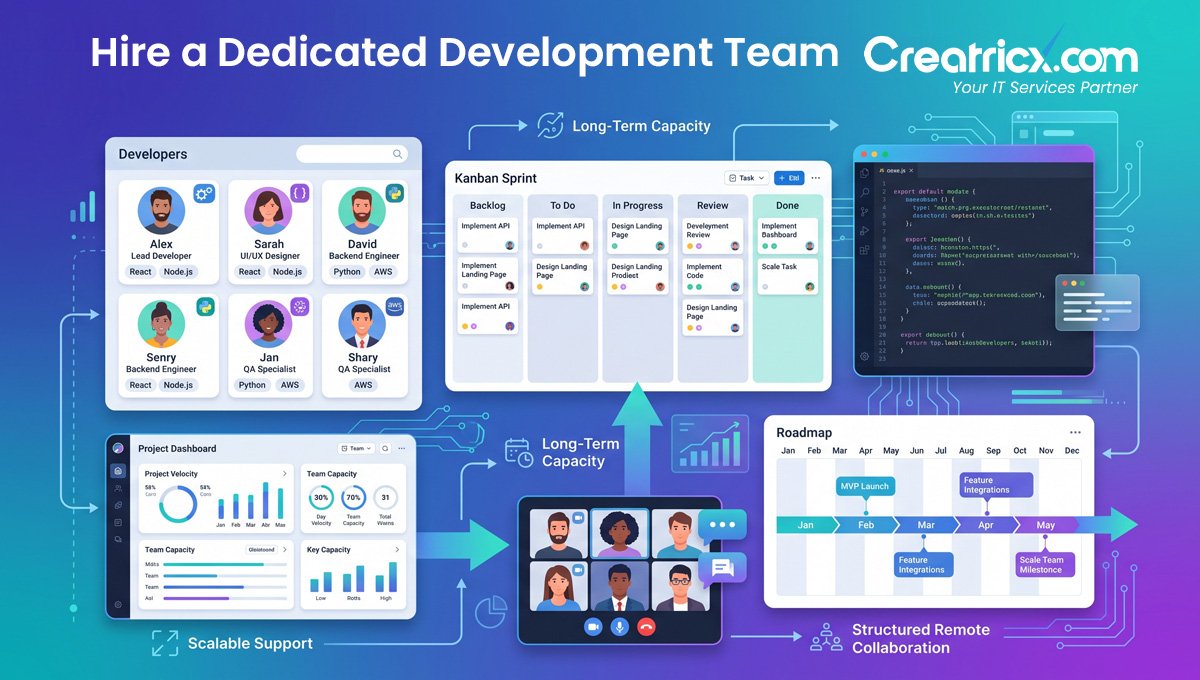
A dedicated development team is a group of remote or outsourced professionals who work regularly on your project, product, website, app, or software platform. Instead of hiring separate freelancers for every task, you get a consistent team that understands your goals, systems, and workflow. This team can include front-end developers, back-end developers, full-stack developers, QA testers, UI/UX designers, DevOps engineers, technical leads, and project managers, depending on the project.
The main difference is focus. A freelancer may handle a single task. A traditional agency may deliver a fixed project. A dedicated development team gives you ongoing technical capacity that can support long-term development, maintenance, improvements, and scaling.
For businesses that need regular development work but don’t want to build a full in-house department, this model can be a practical middle ground.
Dedicated Team vs Staff Augmentation, Outsourcing, and In-House Hiring
These hiring models can overlap, and providers may use the terms differently. Compare the actual responsibilities in the proposal: who selects people, who assigns daily work, what the provider manages, and what you are paying for. Creatricx also explains its staff augmentation, offshore development center, and dedicated remote team models on their service pages.
| Model | What you engage | Who usually directs day-to-day work | Often fits when |
|---|---|---|---|
| Dedicated development team | Ongoing capacity from a team selected around your roadmap; roles can include development, QA, design, or DevOps. | You, the provider, or a shared arrangement, as agreed in the engagement. | Product work is ongoing and needs continuity across several skills. |
| Staff augmentation | One or more specialists added to an existing team. | Your internal lead or manager. | You have delivery management in place and need specific skills or extra capacity. |
| Project outsourcing | A defined scope or deliverable, often with a provider-led delivery plan. | Usually the provider manages execution against the agreed scope; confirm decision rights and change control. | Requirements and acceptance criteria are sufficiently clear for a defined project. |
| In-house hiring | Employees recruited into your organization. | Your internal management structure. | You need long-term internal capability and are prepared to manage recruitment and employment. |
| Offshore development center (ODC) | A more structured offshore operation that can grow across roles and operational needs. | Governance is agreed between your business and the ODC provider. | You expect to build a larger or longer-term offshore function. |
A dedicated team is not automatically the right choice for every project. If you only need a single specialist, staff augmentation may be simpler. If the deliverable is fixed, project outsourcing may fit. If you need ongoing, coordinated capacity, compare dedicated-team proposals and make management responsibilities explicit.
Dedicated Development Team
Need a Dedicated Development Team You Can Scale With?
If your project needs regular development support, Creatricx can help you build a dedicated remote team around your goals, timeline, and technical needs. From web development and app development to QA, UI/UX, DevOps, and long-term maintenance, you get consistent support without hiring every role in-house.
When Should You Hire a Dedicated Development Team?
You should hire a dedicated development team when your project needs regular development work, steady technical support, or faster progress than your current team can manage.
This model is useful when the work is too important for occasional freelance help, but you’re not ready to build a full in-house department.
It Works Best for Long-Term Projects
A dedicated team makes sense when you’re building or improving a:
- SaaS platform
- Mobile app
- Web application
- Customer portal
- Business dashboard
- E-commerce system
- Custom internal tool
These projects usually don’t end after launch. They need updates, testing, bug fixes, new features, performance improvements, and ongoing technical decisions.
It Helps When Your Internal Team Is Overloaded
If your current team is already handling daily tasks, adding a major development project can slow everything down. A dedicated team gives you extra capacity without forcing you to hire several full-time employees at once.
It Gives You Access to Multiple Skills
Most serious projects need more than one type of expertise. A dedicated team can include front-end developers, back-end developers, QA testers, UI/UX designers, DevOps support, and technical leadership.
Planning note: One person may cover several responsibilities on a small project, but confirm which skills are essential and where specialist support is needed.
It’s Useful When Development Is Tied to Business Growth
If the website, app, or platform directly supports sales, operations, customer experience, or service delivery, delays can cost more than the team itself.
In simple terms, hire a dedicated development team when the work is ongoing, the project matters, and you need reliable technical capacity without building everything in-house from scratch.
Step-by-Step: How to Hire a Dedicated Development Team
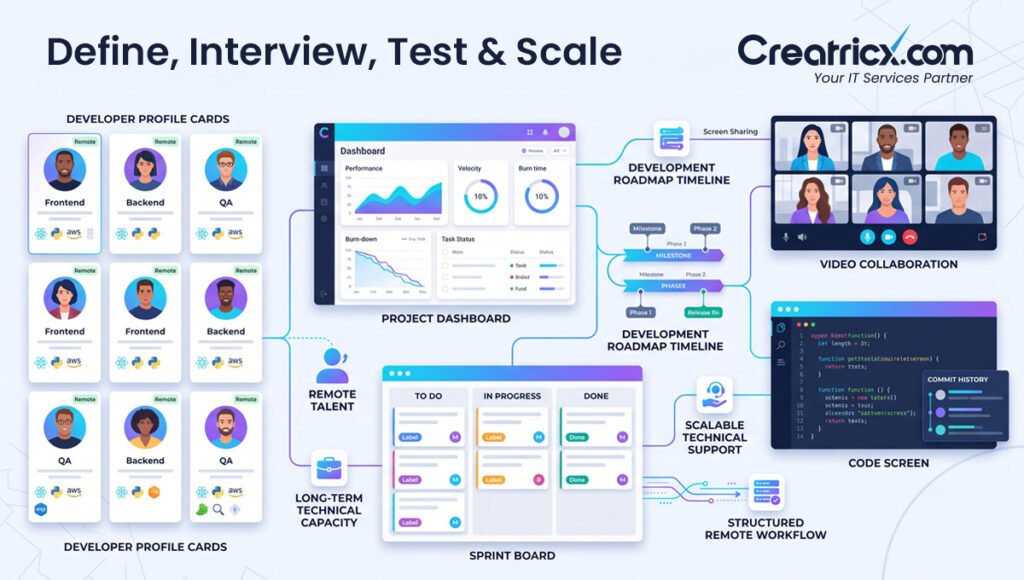
Hiring a dedicated development team works best when you treat it like a structured business decision, not a rushed search for “developers available now.” The goal is to find a team that can understand your project, communicate clearly, and deliver consistently.
1. Define What You Need First
Start with the basics before speaking to providers. Be clear about:
- What you want to build or improve
- Which platforms or technologies are involved
- What problems the team needs to solve
- How much work you expect each month
- What timeline you’re working toward
- What budget range is realistic
A clear brief helps providers estimate the team composition, effort, assumptions, and risks. If some requirements are still uncertain, list them as open questions rather than treating them as settled scope.
2. Decide Which Roles You Need
A dedicated team doesn’t always mean hiring only developers. Depending on the project, you may need front-end developers, back-end developers, QA testers, UI/UX designers, DevOps support, or a technical lead.
For smaller projects, a compact team may be enough. For larger products, you’ll need clearer role coverage.
3. Shortlist Experienced Providers
Look for providers that have worked on similar websites, apps, platforms, or business systems. Don’t only check whether they “do development.” Check whether they understand the kind of product you’re building.
Review their:
- Portfolio
- Case studies
- Technical services
- Team structure
- Client reviews
- Communication process
4. Interview the Actual Team
Don’t only speak to the sales person. Ask to meet the project manager, technical lead, or developers who may work on your project.
Ask how they handle requirements, code reviews, testing, reporting, blockers, deadlines, and change requests. Their answers will tell you more than a polished proposal ever will.
5. Check Communication and Overlap
A dedicated team should fit your working rhythm. Confirm meeting times, update frequency, reporting style, time-zone overlap, and main communication channels before the project starts.
Good communication supports delivery, but it should sit alongside technical capability, quality checks, and clear ownership.
6. Agree on Pricing, Ownership, and Access
Before work begins, confirm the commercial and legal basics:
- Monthly or hourly cost
- Team size
- Minimum commitment
- Code ownership
- IP rights
- Access rules
- Confidentiality
- Notice period
- Support terms
Confirm ownership in writing. Specify the rights to code, design files, documentation, repositories, and other project deliverables in the agreement.
7. Start With a Clear First Milestone
Begin with a small but meaningful milestone before scaling the team. This helps you test delivery quality, communication, speed, and problem-solving without committing too much too early.
Once the team proves it can deliver, you can expand the workload, add roles, or move into longer-term development.
Best practice: Test the team with one meaningful milestone, review the output, then scale based on evidence rather than sales promises.
What to Check Before Hiring a Dedicated Team
Before hiring a dedicated development team, look beyond the proposal and check how the team actually works. A low rate or polished sales call doesn’t mean much if the team can’t communicate, test properly, or deliver clean work.
Relevant Project Experience
Check whether the team has worked on similar websites, apps, SaaS platforms, dashboards, e-commerce stores, or custom systems. General development experience is useful, but relevant experience reduces the learning curve.
Technical Skills
Make sure the team understands the technologies your project needs. This may include front-end frameworks, back-end languages, databases, CMS platforms, APIs, cloud setup, DevOps, testing tools, or mobile app frameworks.
Code Quality Process
Ask how they review code, manage repositories, handle version control, document work, and prevent rushed changes from breaking existing features. Code quality is easier to maintain when review, testing, and documentation practices are agreed before delivery begins.
QA and Testing
A dedicated team should have a clear testing process before work goes live. This includes feature testing, browser testing, mobile testing, form testing, user flow checks, and bug tracking.
Communication Style
Review how they provide updates, handle feedback, report blockers, and explain technical decisions. You need a team that can communicate clearly, one that reports progress, blockers, and decisions in a way your stakeholders can understand.
Security Practices
Check how they manage access, passwords, environments, backups, user data, and permissions. If they need access to hosting, repositories, analytics, or production systems, those permissions should be controlled and documented.
Ownership Terms
Confirm who owns the code, design files, documentation, credentials, repositories, and final product. This should be written clearly before the work starts.
Availability and Overlap
A remote team can work well across time zones, but you still need agreed overlap hours for meetings, feedback, reviews, and urgent decisions.
Before signing, confirm who owns decisions, how work will be reviewed, how issues are raised, and what information the provider needs from your team.
What Roles Should Be in a Dedicated Development Team?
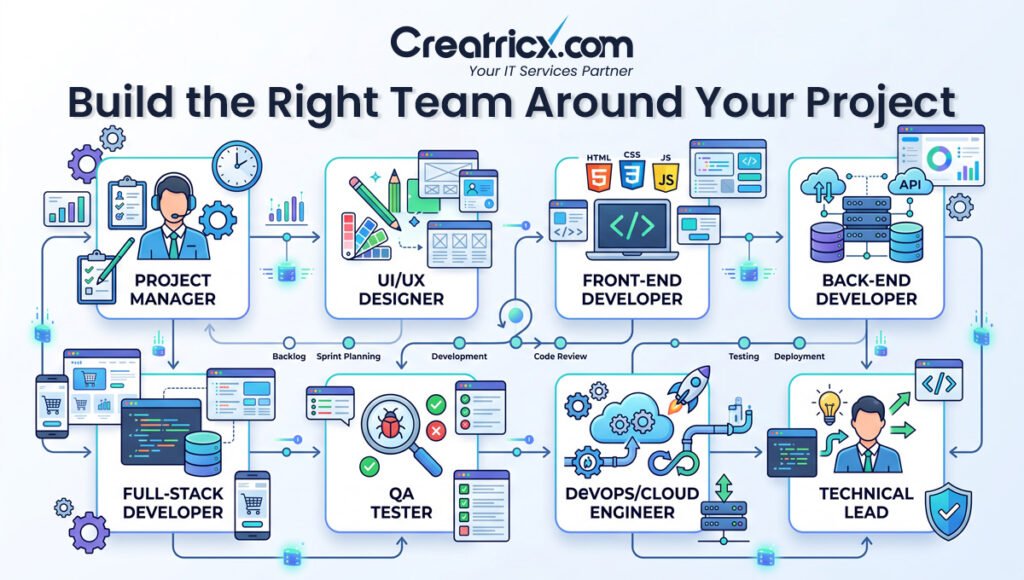
A dedicated development team should match the work you actually need done. Some projects only need two or three people. Others need a fuller setup with design, development, testing, infrastructure, and project coordination.
| Role | What They Handle |
| Front-end developer | Builds the visible parts of the website, app, or platform that users interact with. |
| Back-end developer | Handles databases, APIs, server logic, user accounts, permissions, and secure data flow. |
| Full-stack developer | Works across both front-end and back-end when the project needs broader technical support. |
| UI/UX designer | Plans user journeys, wireframes, layouts, and interface flows before development starts. |
| QA tester | Tests features, forms, bugs, browser issues, mobile behaviour, and user flows before release. |
| Project manager | Keeps tasks, deadlines, updates, feedback, and communication organised. Coordinates tasks, delivery dates, feedback, and communication. |
| DevOps or cloud engineer | Supports hosting, deployments, servers, cloud setup, backups, monitoring, and release pipelines. |
| Technical lead | Guides architecture, reviews technical decisions, supports developers, and keeps code quality on track. |
You don’t always need every role from day one. A small website project may only need a developer, designer, and QA support. A SaaS platform, mobile app, or custom web application will usually need a stronger mix of technical roles.
The best setup is the one that fits the project stage. Start with the roles needed to deliver the first milestone, then add more support as the workload grows.
8 Common Mistakes to Avoid When Hiring a Dedicated Development Team
Hiring a dedicated development team can save time and give your business stronger technical capacity, but only if the setup is clear from the start. The wrong approach can lead to delays, poor code quality, weak communication, and budget waste. Many of these issues can be reduced by agreeing on scope, responsibilities, and review practices before work begins.
- Hiring only by the lowest price: A cheaper team may cost more later if the work needs to be rebuilt, tested again, or fixed after launch. Price matters, but delivery quality, reliability, and technical process matter more.
- Starting without a clear scope: If the team doesn’t know what needs to be built, which features matter, and what success looks like, the project can drift quickly.
- Skipping the technical interview: Don’t rely only on a proposal or sales call. Speak with the technical lead or developers who’ll actually work on the project.
- Ignoring communication fit: A skilled team still needs to explain progress, blockers, timelines, and decisions clearly. Poor communication can slow down even good developers.
- Not checking code ownership: Make sure your contract clearly states who owns the code, repositories, documentation, design files, and final product.
- Giving full access too early: Share only the access the team needs. Use separate accounts, permissions, and secure handover processes instead of sharing shared or administrator credentials unnecessarily.
- Skipping a trial milestone: Start with a small, meaningful task or milestone before expanding the team. This helps you test quality, speed, and communication with lower risk.
- Measuring only hours, not output: Hours matter, but progress should be judged by completed tasks, working features, clean handoffs, tested releases, and business value.
A dedicated team works best when expectations are clear, access is controlled, ownership is documented, and performance is measured by real delivery rather than vague activity.
Build Your Remote Development Capacity
If your business needs consistent development support but isn’t ready to hire a full internal team, a dedicated remote team can give you the flexibility to move faster without overloading your current staff.
How Much Does a Dedicated Development Team Cost?
The cost of a dedicated development team depends on team size, location, seniority, tech stack, project complexity, and how long you need the team. A small team for website support will cost far less than a full product team building a SaaS platform, mobile app, or custom system.
Company Pricing Benchmark
As a current benchmark, Clutch’s 2026 software development pricing guide says many listed software development companies charge $24–$49 per hour, while reviewed software development projects often fall between $10,000 and $49,000.
Individual Talent Benchmark
For freelance or individual talent, Upwork’s 2026 hourly rate guide shows broad pricing, with advanced technical roles often reaching $100+ per hour, depending on skill level and experience.
How to Prepare a Useful Team Cost Estimate
Public hourly benchmarks are not a quote for your team. To compare proposals fairly, ask each provider to price the same brief and list the assumptions behind the estimate. Include the roles and seniority needed, expected hours or allocation, location and working-hour overlap, management and QA coverage, onboarding, tools, contract term, and any costs that are excluded.
Example brief to price: “We need ongoing development support for an existing web product. Please propose the roles you recommend, the expected time allocation for each, who will manage sprint priorities and QA, how onboarding is handled, and which costs are outside the monthly estimate.” This gives providers enough context to explain their assumptions without presenting a made-up market price as a quote.
In practical terms, cost usually changes based on:
- Team size: One or two developers cost less than a full team with QA, UI/UX, DevOps, and project management.
- Seniority: Senior developers and technical leads cost more, but they can reduce mistakes and guide architecture better.
- Location: Offshore and nearshore teams often cost less than local hiring in the US, UK, or Western Europe.
- Project type: A business website, e-commerce platform, mobile app, SaaS product, and internal system all need different levels of effort.
- Engagement length: Long-term dedicated teams may use monthly pricing, while shorter work may be hourly or milestone-based.
- Management level: A managed team with project coordination, QA, reporting, and technical leadership usually costs more than hiring developers only.
A dedicated team usually costs more than one freelancer, but it can be more practical than building a full in-house department. The real question isn’t only the hourly rate. It’s whether the team can deliver clean work, communicate clearly, and reduce delays instead of creating more expensive problems later.
How Creatricx Helps You Hire a Dedicated Development Team
Creatricx helps businesses build dedicated remote development teams based on their project goals, workload, timeline, and technical needs. Instead of hiring separate people for every role, you can get a structured team that supports development, testing, design, deployment, and long-term maintenance.
The team can be shaped around your project, including web developers, mobile app developers, full-stack developers, UI/UX designers, QA testers, DevOps support, project coordination, and technical leadership.
Creatricx can support businesses that need:
- Website development and redesign
- Mobile app development
- SaaS product development
- E-commerce development
- Custom web applications and software
- API integrations
- QA and testing
- UI/UX design support
- Cloud and DevOps support
- Ongoing development support and feature updates
This makes it easier to scale development capacity without building a full in-house department from scratch. You keep control of goals, approvals, and business direction, while Creatricx provides the technical team needed to move the project forward.
How the Hiring and Onboarding Process Works
The engagement should begin with a shared understanding of the work and who will make day-to-day decisions. A practical process can cover these steps:
- Discovery: Discuss the roadmap, current team, required skills, technology, workload, target working hours, and constraints.
- Team selection: Agree on the roles and team structure. Where candidate selection is part of the engagement, review relevant experience and confirm fit before onboarding.
- Working agreements: Confirm responsibilities, communication channels, meeting cadence, task and code review process, access permissions, confidentiality, and ownership terms.
- Onboarding: Provide the required project context, documentation, tools, repository or environment access, and points of contact. Use least-privilege access and record who approves changes.
- First delivery review: Agree on an initial milestone, review the work and communication together, address blockers, and adjust priorities or role coverage based on what the project needs.
Illustrative First-Month Plan
The sequence below is a planning example, not a guaranteed schedule. The pace depends on team availability, access to the codebase and stakeholders, documentation, and project complexity.
| Stage | Example activities | What to confirm |
|---|---|---|
| Kickoff and setup | Introductions, tools, access, security requirements, product walkthrough, and working agreements. | Who owns priorities, approvals, urgent questions, and access changes? |
| Context and planning | Review the existing codebase, documentation, backlog, architecture, and release process. | Are the first tasks understood, sized, and ordered? |
| First delivery cycle | Work on an agreed milestone with code review, testing, and regular progress updates. | Are quality checks, handoffs, and feedback working as intended? |
| Review and adjust | Review completed work, blockers, communication, and upcoming priorities. | Should the scope, team roles, or operating rhythm change? |
Before the team starts, agree who will manage the backlog and approve work. Creatricx describes the dedicated-team model as integrated with the client’s tools and priorities; the specific governance and support should be confirmed for the proposed engagement.
FAQs About Hiring a Dedicated Development Team
What is a dedicated development team?
A dedicated development team is a group of remote or outsourced specialists who work regularly on your project. The team may include developers, QA testers, UI/UX designers, DevOps engineers, project managers, and technical leads, depending on the work required.
How do I hire a dedicated development team?
Start by defining your project goals, required roles, budget, timeline, and workload. Then compare providers, review relevant experience, interview the actual team, check communication and security practices, agree on ownership terms, and begin with a clear first milestone.
Is a dedicated team better than freelancers?
A dedicated team is usually better for ongoing development, larger products, or projects that need multiple skills. A freelancer can work well for small tasks or short-term fixes, but one person may not cover development, testing, design, DevOps, and project coordination.
How many people should be in a dedicated development team?
The team size depends on the project. A small website or app may need two or three people, while a SaaS platform, e-commerce system, or custom web application may need developers, QA, UI/UX, DevOps, and project management support.
How much does a dedicated development team cost?
The cost depends on team size, location, seniority, tech stack, project complexity, and engagement length. A dedicated team usually costs more than hiring one freelancer, but it can be more flexible than building a full in-house department.
Can a dedicated development team work remotely?
Yes, dedicated development teams often work remotely. The key is to set clear communication rules, overlap hours, reporting methods, project management tools, access controls, and regular review meetings.
Who manages a dedicated development team?
Management depends on the hiring model. Some businesses manage the team directly, while others work with a project manager or technical lead provided by the development partner. Either way, priorities, feedback, and approvals should stay clear.
How do I protect my code and IP?
Protect your code and IP by using written contracts, clear ownership terms, controlled access, private repositories, secure credential sharing, NDAs where needed, and documented handover rules. Document ownership and handover terms before work begins.
Final Thoughts
Hiring a dedicated development team works best when your project needs long-term focus, technical depth, and reliable delivery. It’s a strong option for businesses building websites, apps, SaaS platforms, dashboards, e-commerce systems, or custom software that needs regular updates and support.
The process should start with clarity. Define what you need, choose the right roles, review relevant experience, check communication, protect ownership, and begin with a clear first milestone before scaling.
A dedicated team isn’t just extra hands. The right team gives your business ongoing technical capacity without forcing you to hire every role in-house from day one.
Creatricx helps businesses build dedicated remote development teams for web development, mobile app development, QA, UI/UX, DevOps, e-commerce projects, SaaS platforms, and long-term technical support.
Ready to Move Forward?
Talk to a Dedicated Team Expert
Discuss your roadmap, required roles, timeline, and technical priorities with Creatricx before committing to a team structure.
Talk to a Dedicated Team Expert