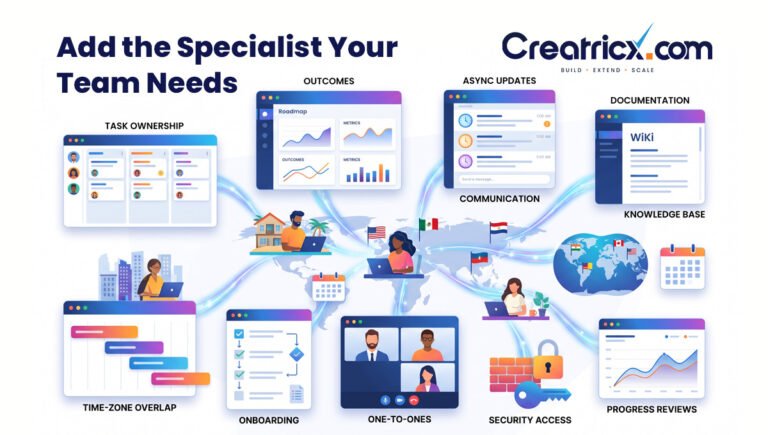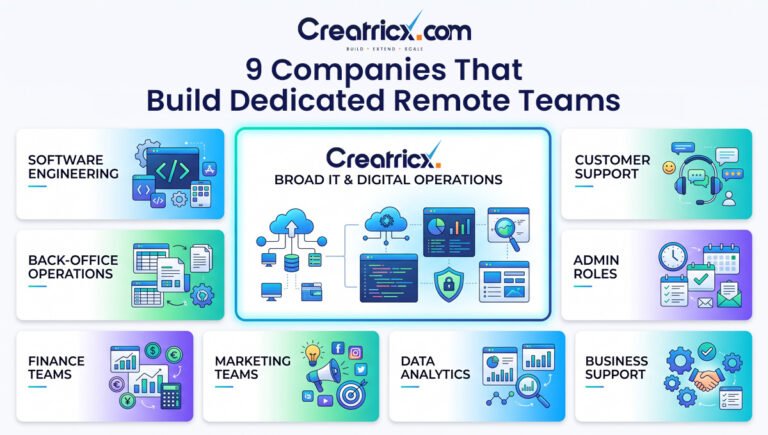

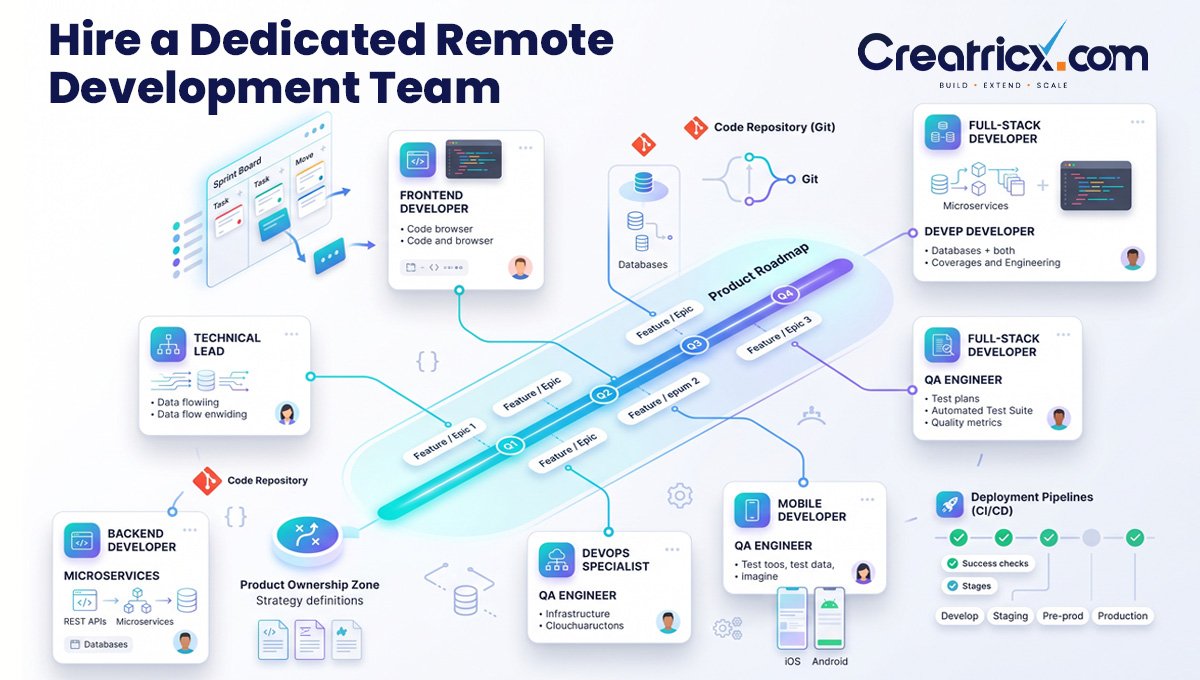
Original Creatricx instructional graphic.
Table of Contents
When Does a Dedicated Remote Development Team Make Sense?
Use a dedicated team when development is ongoing, several technical roles must coordinate and product knowledge needs to accumulate across releases. If one specialist can remove the bottleneck, use a dedicated developer or staff augmentation. If you want a provider to own a fixed scope and finished outcome, use project delivery instead.
What Should the Team Actually Include?
| Role | Use it when the roadmap needs |
|---|---|
| Frontend developer | Product UI, component development, responsive interfaces and frontend integrations. |
| Backend / full-stack developer | APIs, databases, business logic, integrations and end-to-end features. |
| Mobile developer | iOS, Android or cross-platform product work and release support. |
| QA engineer | Regression coverage, release testing and repeatable quality checks. |
| DevOps specialist | CI/CD, environments, cloud infrastructure, monitoring and release reliability. |
| Technical lead | Architecture decisions, technical standards, code review and coordination across roles. |
Hire the smallest team that can own the next meaningful part of the roadmap without creating an obvious dependency bottleneck.
Use the 90-Day Team Charter Before You Request CVs
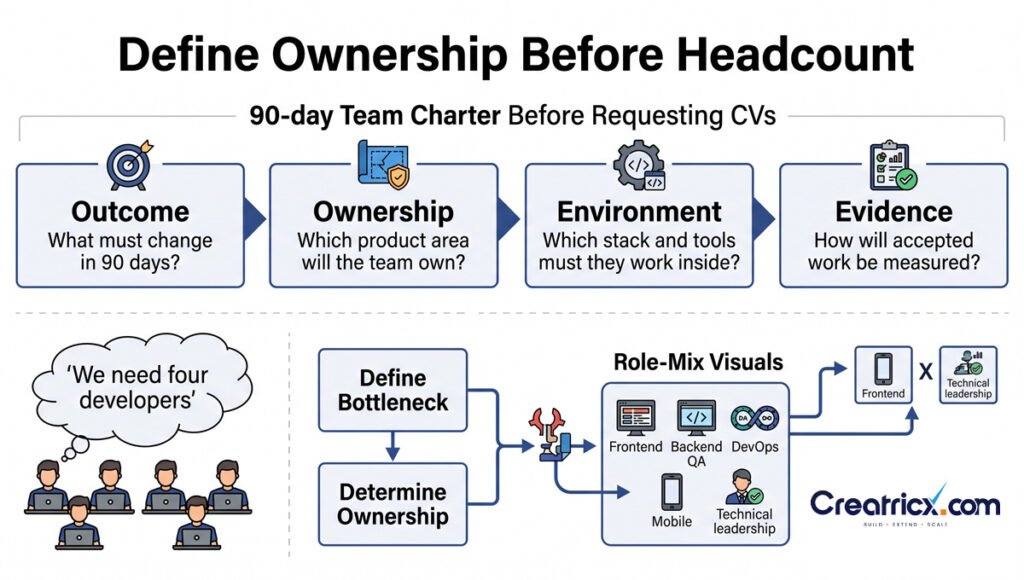
Most hiring guides say “define requirements”. Make that useful by answering four questions before candidate selection:
Outcome
What must be visibly different after 90 days: a released module, reduced backlog, stronger test coverage or a product area moving again?
Ownership
Which backlog, service, application or product area will the team own?
Environment
What stack, repositories, standards, tools, security rules and working-hour overlap must the team work inside?
Evidence
How will you judge accepted work, release quality, backlog movement, rework and reduced internal blocking?
Dedicated Team vs Staff Augmentation vs Project Outsourcing
| Model | Best fit | Who usually directs daily work? |
|---|---|---|
| Dedicated remote team | Several roles need to work together on an ongoing roadmap. | Client-directed or shared, depending on team setup. |
| Staff augmentation | Your existing team needs one or more specific specialists. | Client team. |
| Dedicated developer | You need developer-specific capacity rather than a full multi-role team. | Client team. |
| Project outsourcing | You need a defined outcome, release or product delivered. | Provider within the agreed scope. |
| Offshore Development Center | You need a larger structured offshore operation with leadership and operational support. | Shared governance with client strategic direction. |
How to Vet the Provider, Not Just the Developers
Interview the actual developers, but vet the provider too. Ask who controls repositories and access, how handover works if someone leaves, and whether the team can rebalance as the roadmap changes. In candidate interviews, ask about architecture decisions, difficult bugs, code review and blocker communication rather than relying only on framework trivia.
How Creatricx Builds a Dedicated Remote Development Team
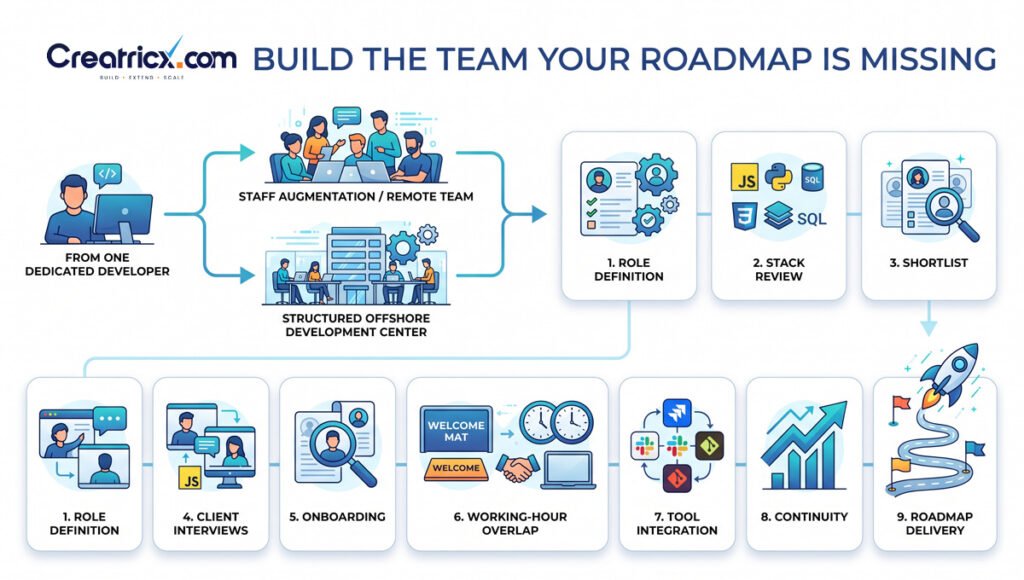
Creatricx starts with the goal, roles, seniority, stack, tools, working hours and expected contribution. The client reviews and interviews suitable professionals before selected people join the agreed delivery environment.
Start with one dedicated developer or expand across frontend, backend, mobile, QA and infrastructure. Creatricx supports talent, onboarding and continuity while the client retains roadmap and approval control.
What Should You Send Before Asking for a Quote?
What you are building and the product area that needs help.
Current stack, repositories and deployment environment.
Roles, seniority and who sets priorities.
Required overlap, start period and security/access constraints.
Frequently Asked Questions
What is a dedicated remote development team?
A dedicated remote development team is a stable group of external software professionals assigned to one client for ongoing engineering work. Roles can include developers, QA, DevOps and technical leadership depending on the roadmap.
When should I hire a dedicated development team?
Use the model when development is ongoing, several roles must coordinate and retaining product knowledge matters. For one short, fixed deliverable, project outsourcing may be simpler.
What is the difference between staff augmentation and a dedicated team?
Staff augmentation adds specific specialists into an existing client-managed structure. A dedicated team fits better when several roles need to operate together around one continuing roadmap.
Final Takeaway
If you want to hire a dedicated remote development team, begin with the engineering responsibility that has no reliable owner, define what success should look like in 90 days, and interview the actual people who will do the work.
Creatricx can support one dedicated developer, Staff Augmentation, a coordinated remote development team or a structured Offshore Development Center as the requirement grows. The goal is to build the engineering capacity your roadmap is missing.