
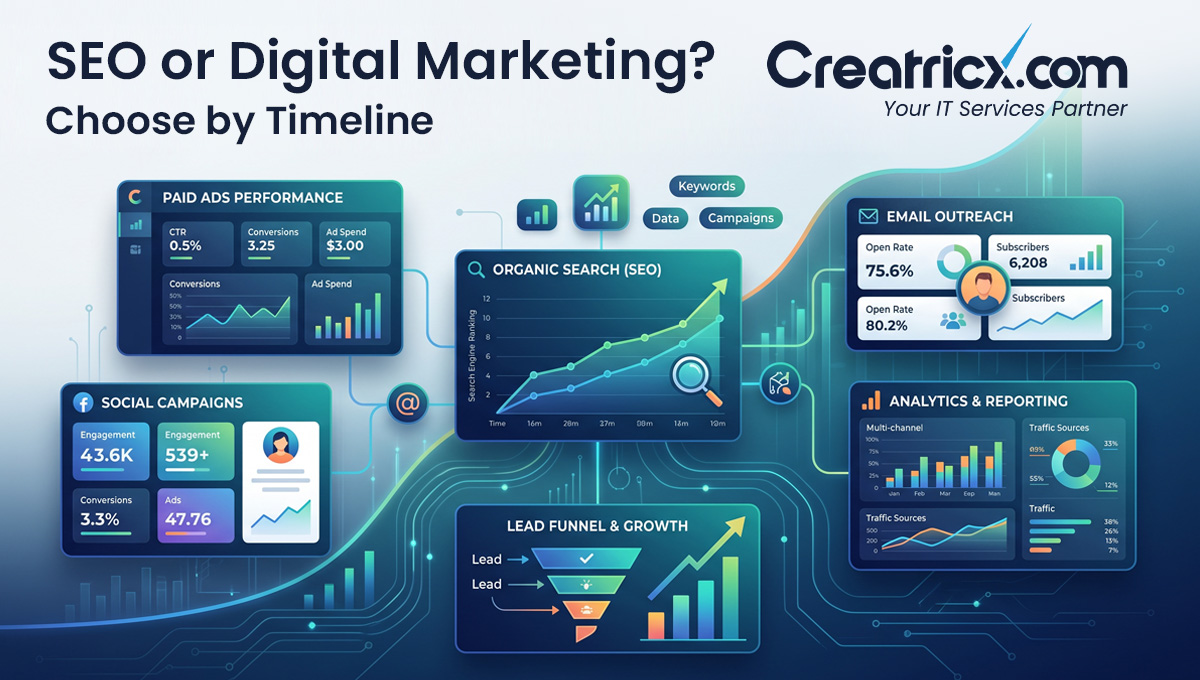
You need SEO if you can wait 3 to 12 months for compounding, low-cost traffic; you need broader digital marketing (paid ads, social, email) if you need leads this month. Most growing businesses eventually need both, just not on the same timeline or budget line.
Key Takeaways
- SEO is one channel inside digital marketing, not a competing alternative to it; treating them as an either/or choice is the most common mistake businesses make.
- SEO typically takes three to six months to show first movement and closer to twelve months to compound meaningfully, while paid campaigns can generate leads within days of launch.
- SEO delivers roughly 8x average ROI over time compared to 2-4x for PPC, but PPC stops producing the moment you stop paying, while SEO keeps working after the initial investment.
- SEO leads close at a meaningfully higher rate than outbound and paid leads, since organic search traffic tends to arrive already looking for a solution rather than being interrupted by an ad.
- The right starting point depends less on preference and more on two honest questions: how soon do you need revenue, and how much budget can you commit to something that won’t show results in month one.
Table of Contents
The Question Most Businesses Ask Backwards
“Should I do SEO or digital marketing?” is a bit like asking “should I get fit or should I go to the gym?” SEO is a channel within digital marketing, alongside paid search, social advertising, email, and content. The more useful question isn’t which one to pick, it’s which channel matches what you actually need right now, because SEO and paid marketing solve genuinely different problems, and most businesses end up needing both eventually, just at different stages and budget levels.
A quick way to reframe this: paid marketing rents attention, SEO builds an asset you own. Renting gets you a customer this week. Owning gets you a customer next year without paying for that click again. Neither is wrong, they just answer different questions.
What Actually Happens On Each Timeline
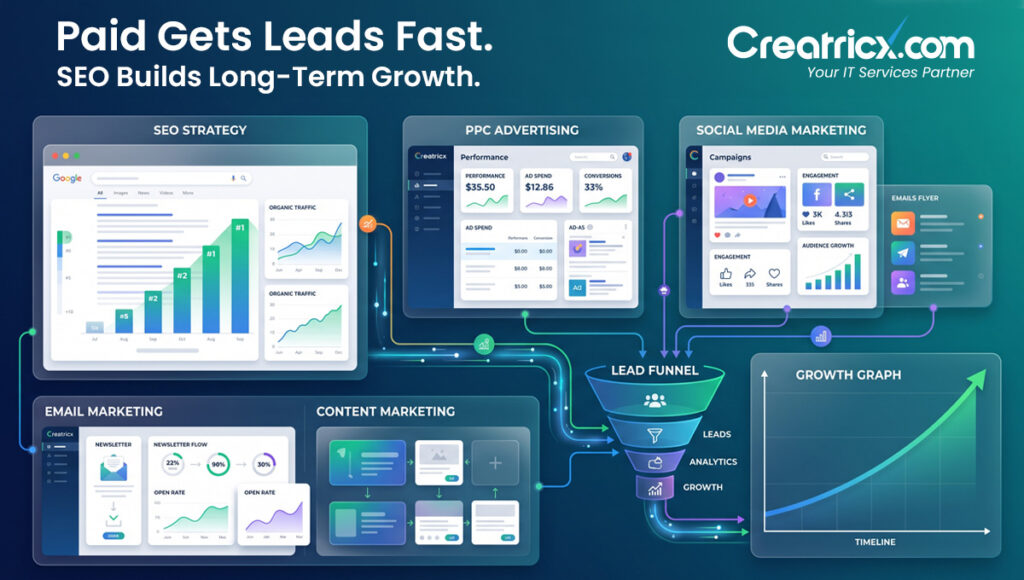
If you launch a paid campaign today, you can have clicks, leads, and possibly a sale by the end of the week. If you start an SEO campaign today, you’ll likely see your site being crawled more frequently within a few weeks, early keyword movement within one to three months, and meaningful ranking gains from month three to six, with the real compounding effect showing up around month twelve.
Neither timeline is a flaw in the channel, it’s just how each one is built. Paid works like a tap: open it and traffic flows, close it and traffic stops immediately. SEO works more like planting something that needs a season before it produces anything, and then keeps producing without you replanting it every month.
The single most common reason businesses conclude “SEO doesn’t work” is judging it on a paid-marketing timeline. A campaign that looks like nothing is happening at week three can be delivering a strong multiple by month six. Killing an SEO investment early because it hasn’t performed like a paid ad is the most expensive mistake in this decision.
An Honest Way To Figure Out Which One You Need First
Ask yourself three questions, in this order.
- First: do you need revenue in the next thirty days, or can the business absorb a slower ramp-up in exchange for a lower long-term cost per customer?
- Second: is your website already getting some organic traffic, or starting from zero with no existing authority?
- Third: what’s your customer’s actual buying behaviour, do they search for what you sell, or do they need to be shown it exists first?
A business selling something people actively search for (plumbers, accountants, software with a known category) usually gets more from SEO sooner. A business selling something people don’t yet know they want (a new product category, an unfamiliar service) usually needs paid and social support to create that demand before SEO has anything to capture.
SEO Vs Broader Digital Marketing, Side By Side
| Factor | SEO | Paid Digital Marketing |
| Time to first results | 3-6 months (sometimes 12 months depends upon niche/industry) | Days to weeks or months |
| Average long-term ROI | Around 8x | Around 2-4x |
| Cost after initial investment | Continues generating traffic with no per-click cost | Stops the moment spend stops |
| Best for | Categories people already search for | New products, urgent timelines, testing messaging fast |
| Lead quality | Higher close rate; visitor already has intent | Varies; can attract lower-intent clicks if targeting is loose |
These are directional industry averages, not a guarantee for any specific business. Your actual results depend on competition in your market, your starting point, and how consistently the work is executed. Treat this table as a planning reference, not a promise.
A Practical Way To Decide What To Do This Quarter
Step 1: Audit What You Already Have
Check if your site currently ranks for anything, even small local terms. Existing traffic, however small, moves an SEO investment faster than starting from a domain with zero history.
Step 2: Be Honest About Your Runway
If the business needs revenue within thirty to sixty days to stay healthy, start with paid campaigns while SEO work runs in parallel in the background, rather than betting the short-term on a channel that takes months to compound.
Step 3: Match the Channel to How Customers Actually Search
If people search for what you sell by name or category, prioritise SEO. If your offer needs explaining before anyone would think to search for it, prioritise paid and social to build that awareness first.
Step 4: Plan to Run Both Eventually, Just Not at Full Budget Simultaneously
Most sustainable growth comes from paid covering the gap while SEO builds, then gradually shifting budget toward organic as rankings compound and cost per lead from search drops.
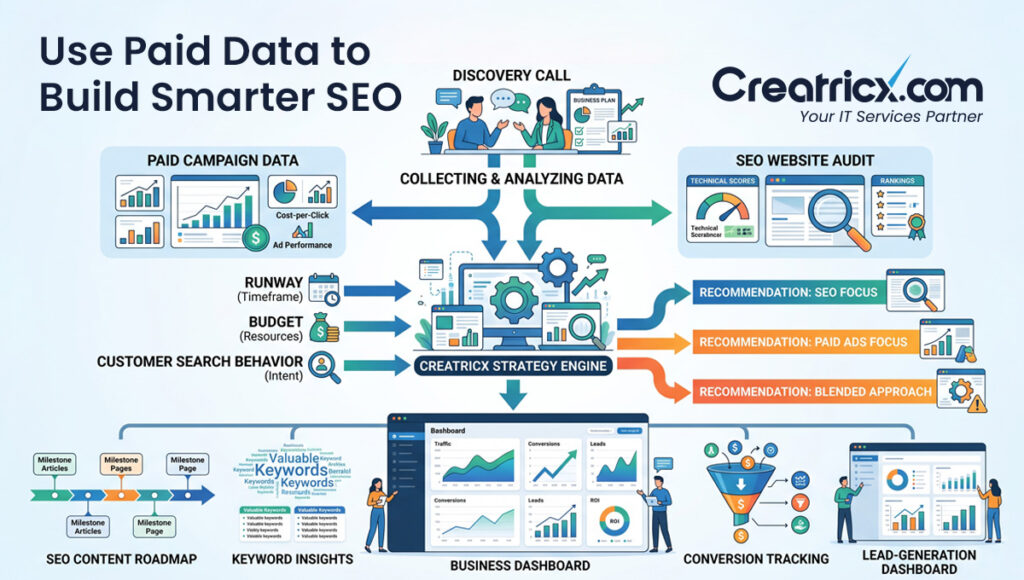
Businesses that run paid and SEO together, rather than choosing one, typically shorten the SEO runway too: paid campaign data reveals which keywords and messages actually convert, which then directs SEO content toward the terms proven to produce leads rather than the terms that simply seem important.
Frequently Asked Questions
Is SEO part of digital marketing or a separate service?
SEO is one channel within digital marketing, alongside paid search, social advertising, email, and content marketing, not a competing alternative to it.
How long does SEO take to show results?
Early movement typically appears within 1 to 3 months, with meaningful ranking gains from 3 to 6 months, and the strongest compounding effect around twelve months.
Is paid digital marketing a waste if I plan to invest in SEO eventually?
No. Paid campaigns can generate revenue while SEO compounds in the background, and the data from paid campaigns often reveals which keywords are worth targeting with SEO content.
Which delivers better ROI, SEO or paid marketing?
SEO typically delivers a higher long-term average return, often cited around 8x versus 2-4x for paid search, but paid marketing produces results far faster.
How do I know if my business needs SEO first or paid marketing first?
It depends on your revenue runway, if customers already search for what you sell, and if your site has any existing organic traffic to build from.
Can a small business realistically do both SEO and paid marketing at once?
Yes, and it’s often more efficient than choosing one, since paid campaign data can directly inform which SEO content is worth prioritising.
What’s the biggest mistake businesses make when choosing between SEO and digital marketing?
Judging SEO on a paid-marketing timeline and abandoning it before month three or four, before the compounding effect has had a chance to show up.
Does Creatricx recommend the same marketing package to every client?
No. Recommendations depend on a discovery conversation covering current site performance, budget runway, and customer search behaviour.
In Summary
SEO and digital marketing aren’t rivals competing for the same job, they’re tools built for different timelines. Paid marketing answers “I need a customer this month.” SEO answers “I want to stop paying for the same customer over and over.” Most businesses that get this decision wrong aren’t picking the wrong channel, they’re judging the slow one by the fast one’s clock and giving up before it has a chance to work. Figure out your actual runway, be honest about how your customers search, and the right starting point usually becomes obvious.